
Artificial IntelligenceAugust 18, 20262 min read
When Intelligence Becomes Abundant
For most of civilization, high-level cognitive ability was scarce. Our institutions were built around that scarcity. What happens when it ends?
William Henley
The Human Foundation
Artificial intelligence is making extraordinary forms of knowledge, reasoning, and capability increasingly abundant.
That changes more than work.
It forces civilization to confront a deeper question:
What must remain human?

We spent centuries asking what machines could do.
The next question is what humans are for.
For generations, societies connected human value to productivity, knowledge, expertise, credentials, labor, and economic output.
Machine intelligence is becoming capable across domains once reserved for highly trained human beings — and it is advancing faster than many of the institutions built around human expertise.
That is enough to unsettle every measure we inherited.
Capability is not worth
A skill is priced by a market. A person is not. The two were only ever joined by convenience.
Function belongs to systems of capability. Worth belongs to a deeper moral category.
Performance was never the proper measure of a person. It was only a convenient one. The Human Foundation exists to help society answer what comes after it.
AI may help cure disease, expand knowledge, reduce dangerous work, accelerate discovery, and create forms of prosperity we cannot yet imagine. We should pursue those possibilities.
But capability cannot tell us what civilization should value.
Technological progress becomes human progress only when we deliberately make it so.
The dangerous interval
The danger is not that humanity becomes obsolete. It is that the old measure of human value collapses before a better one has been built.
Stanford's 2026 AI Index reports that frontier models now meet or exceed human baselines on several difficult reasoning benchmarks — while remaining unexpectedly weak on other seemingly simple tasks. Stanford describes this as a jagged frontier of capability.
Stanford HAI, AI Index 2026
The ILO estimates that roughly one in four workers worldwide are in occupations with some exposure to generative AI, while emphasizing that transformation of jobs currently appears more likely than wholesale redundancy.
International Labour Organization
Stanford's 2026 AI Index reports that roughly one-third of surveyed organizations expected AI to reduce their workforce in the coming year, even though economy-wide job losses had not yet appeared at a corresponding scale.
Stanford HAI, AI Index 2026
We do not need the most extreme predictions about artificial intelligence to be true for this work to be necessary. Even moderate progress changes education, work, expertise, identity, and institutions enough to warrant preparation.
Nothing about that interval is safe by default. It has to be designed, and the people inside it have to be carried through.
The seven human foundations
The Seven Human Foundations are a framework for asking what civilization must protect, strengthen, and intentionally develop as machine capability grows.
A benchmark can measure what you do. It cannot deliver a verdict on who you are.
People need a reason to rise, not only a means to survive.
A good future must let people contribute, not merely receive.
Answers are becoming cheap. Knowing what should be done is not.
Being known by other people is not a service that can be delivered.
When intelligence is abundant, character becomes the scarce infrastructure.
Every decision made now will be inherited by people who had no vote in it.
The Human Economy

Much of the conversation about AI displacement focuses on how people will survive economically if machines perform an increasing share of human work.
That matters. But survival is only part of the problem.
Human beings also need to contribute. To be needed. To develop. To belong. To create. To serve. To influence what happens around them.
A society capable of providing everyone an income could still fail humanity if millions of people no longer believe their presence matters.
The future must provide more than provision. It must preserve participation.
What we are building
The Human Foundation is being built to develop a body of research, writing, education, public conversation, and practical guidance around one central challenge:
How do we make greater machine capability produce greater human flourishing?
Understanding the evidence shaping work, education, institutions, human development, and AI capability.
Building the intellectual vocabulary society needs to think clearly about worth, participation, wisdom, and human flourishing.
Helping leaders, educators, communities, and citizens prepare people for a world in which intelligence is increasingly abundant.
Developing principles and frameworks for organizations making decisions about automation, human participation, and technological transition.
The journal
Ideas for a world becoming more intelligent — and a humanity that must become more intentional.
For most of civilization, high-level cognitive ability was scarce. Our institutions were built around that scarcity. What happens when it ends?
William Henley
The most consequential mistake of the AI era would be a quiet one: allowing a measure of performance to become a measure of people.
William Henley
The displacement conversation has focused almost entirely on income. The harder problem is participation.
William Henley
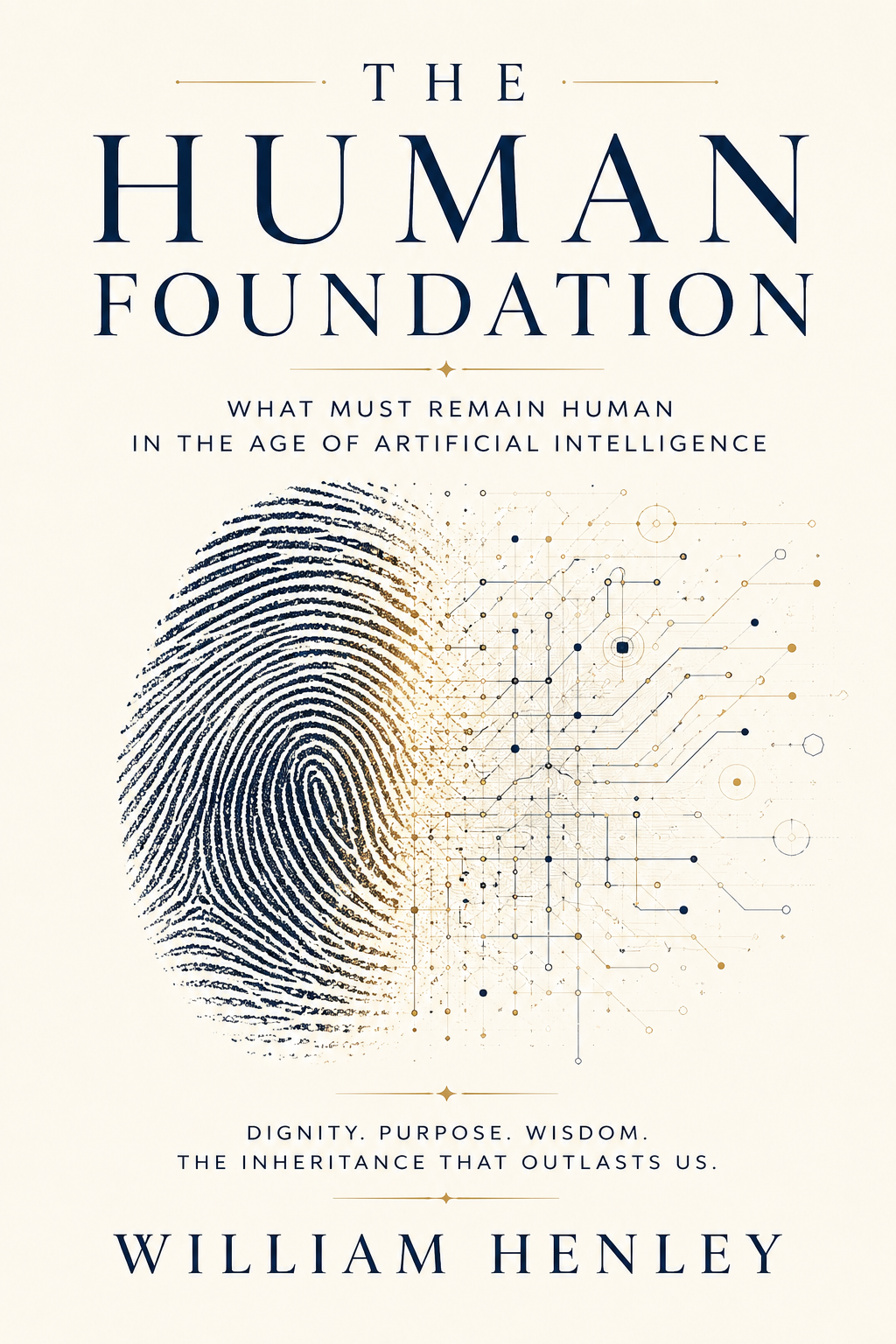
The founding argument
The Human Foundation — What Must Remain Human in the Age of Artificial Intelligence
“The purpose is not to preserve the former economy forever. It is to carry actual human beings across the interval between what technology makes unnecessary and what civilization has not yet learned to value.”
The book articulates the founding argument of this work: that the answer to machine capability cannot simply be economic. This transition will compel us to reconsider work, education, status, purpose, participation, wisdom, relationship, dignity, and the meaning we assign to a human life.
The book does not own The Human Foundation. The Foundation generated the book, and the work continues past it.
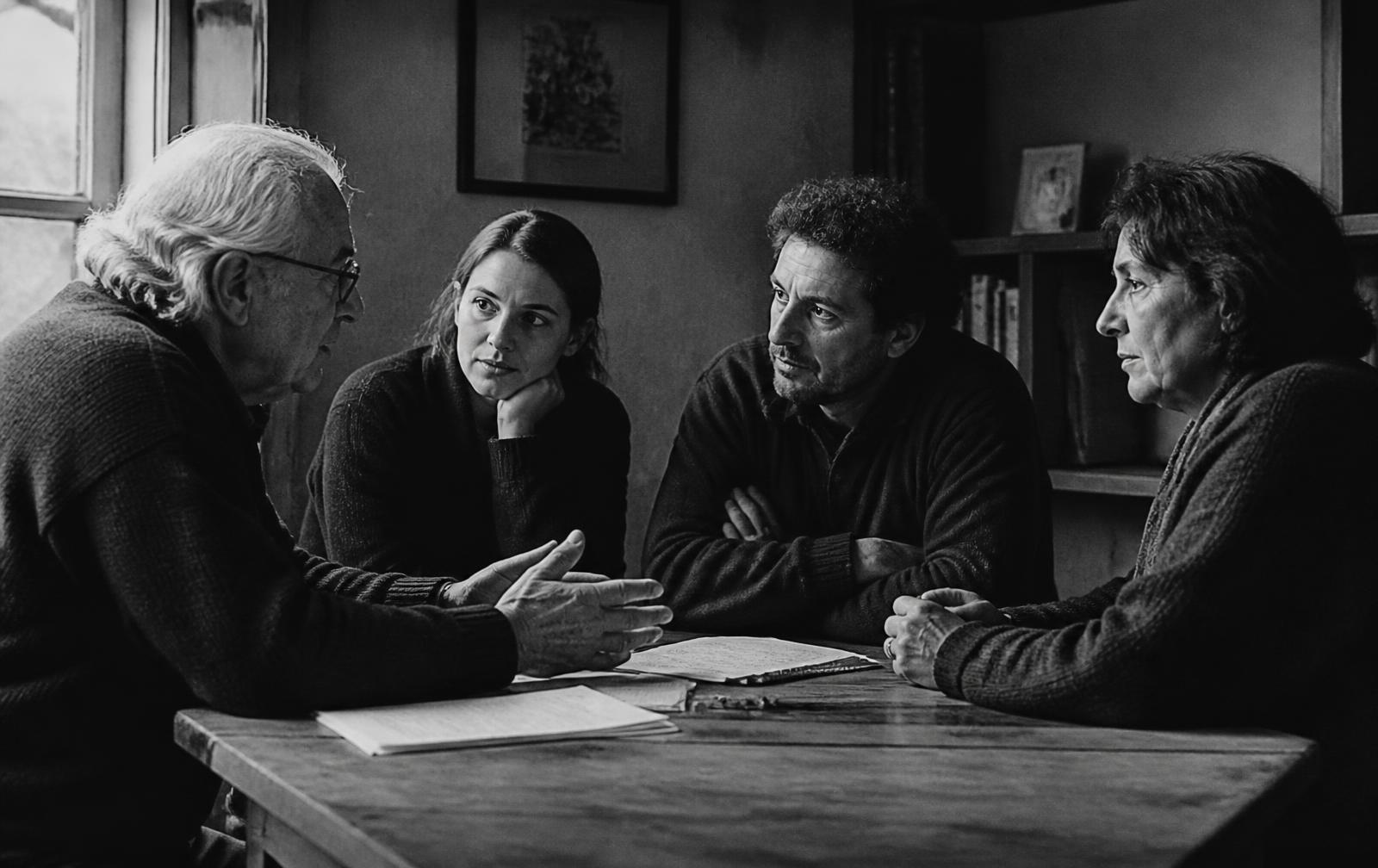
You do not need to be an AI researcher to have standing in the conversation about humanity's future.
If you are raising a child, leading people, teaching students, designing technology, building a company, caring for someone, governing a community, preparing for a changing profession — or simply wondering where you will belong in the world ahead — this question already belongs to you.
Where do human beings fit in the future we are building?
Join the conversation
Join The Human Foundation for new essays, evidence, research, public conversations, and practical frameworks for building a future in which greater machine intelligence produces greater human flourishing.

We are building machines capable of extraordinary things.
The question is no longer simply what they will become capable of.
The question is what we will choose to become alongside them.
The future is not only about artificial intelligence. It is about human intention.
Machines may surpass human performance. They do not surpass human worth.